Understanding Kawaii Aesthetics
The kawaii aesthetic, emerging from Japan, embodies a culture of cuteness that balances playfulness with simplicity. Rooted in the Japanese word ‘kawaii,’ meaning ‘cute’ or ‘lovable,’ this design style transcends typical decor elements and ventures deep into the realm of visual identity alignment. Shaping a kawaii room[1] is less about collecting cheerful objects and more about creating a space that exudes warmth, innocence, and joy. A place where tenderness takes center stage.
Central to the kawaii design philosophy is creating harmony amidst whimsical elements. It encourages the blend of plush toys, pastel colors, and quirky art, all while maintaining a sense of minimalism and elegance. This delicate balance transforms a room, empowering it to function as a personal retreat, a joyful sanctuary from the complexities of the outside world.
Exploring the subtle intricacies of kawaii aesthetics reveals a world that champions non-conformity[2]. It uniquely entails storytelling through visuals, transforming your room not just into a charming space, but an embodiment of your aspirational self, completing the picture-perfect image of you.
Color Palettes: Soft Pastels and Accent Pops
Embracing Pastel Hues
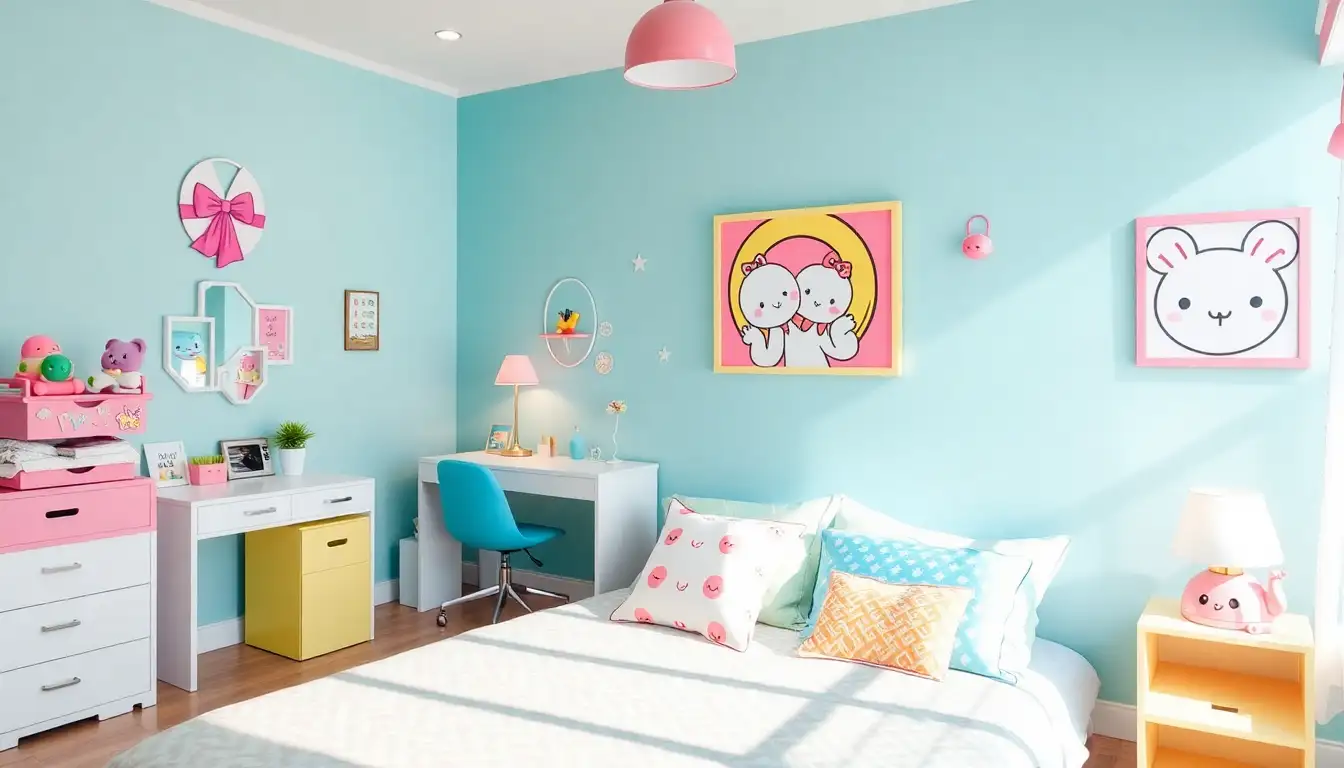
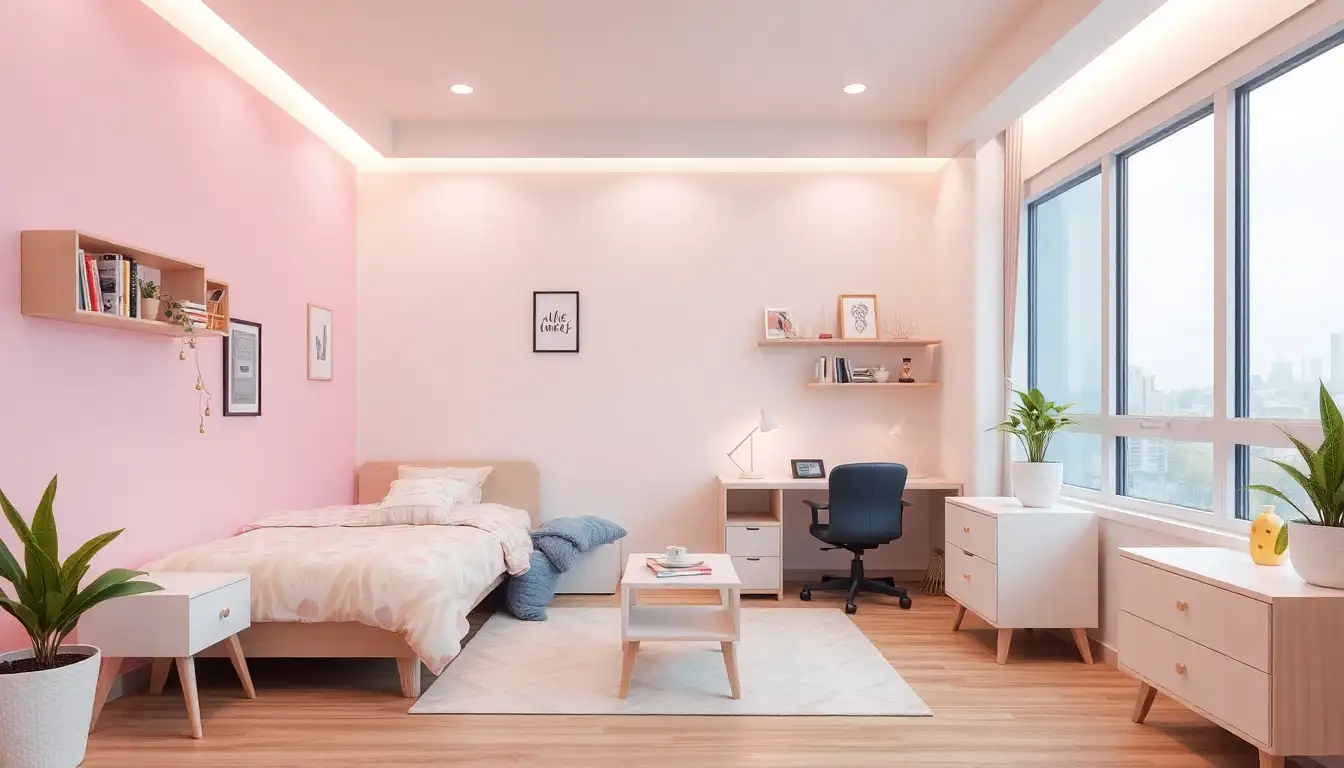
Undoubtedly, soft pastels lie at the heart of kawaii aesthetics. These tender tones bring a sense of tranquility and warmth to a room, crafting an environment that feels both calming and inviting. Imagine a gentle morning sun casting light across walls painted in subtle blush pinks, baby blues, or light mints. Such colors radiate serenity[3], assisting in the delicate balance of a space seeking to inspire relaxation.
Punctuating with Accents
While kawaii embraces its softer side, it equally celebrates the boldness of playful accent colors. Integrating a sprightly pop can enhance the vibrancy of your pastel base. Picture a canary yellow throw pillow strategically placed on an eggshell blue couch or an aqua vase housing fresh blooms against a muted lavender backdrop.
These accents do not jarringly disrupt the serenity; instead, they heighten the intrigue and encourage a visual payoff[4]. This approach subtly invites curiosity and keeps the design fresh without overwhelming the overall harmony.
Key Decor Elements: The Minimalist’s Choice
Simplifying with Purpose
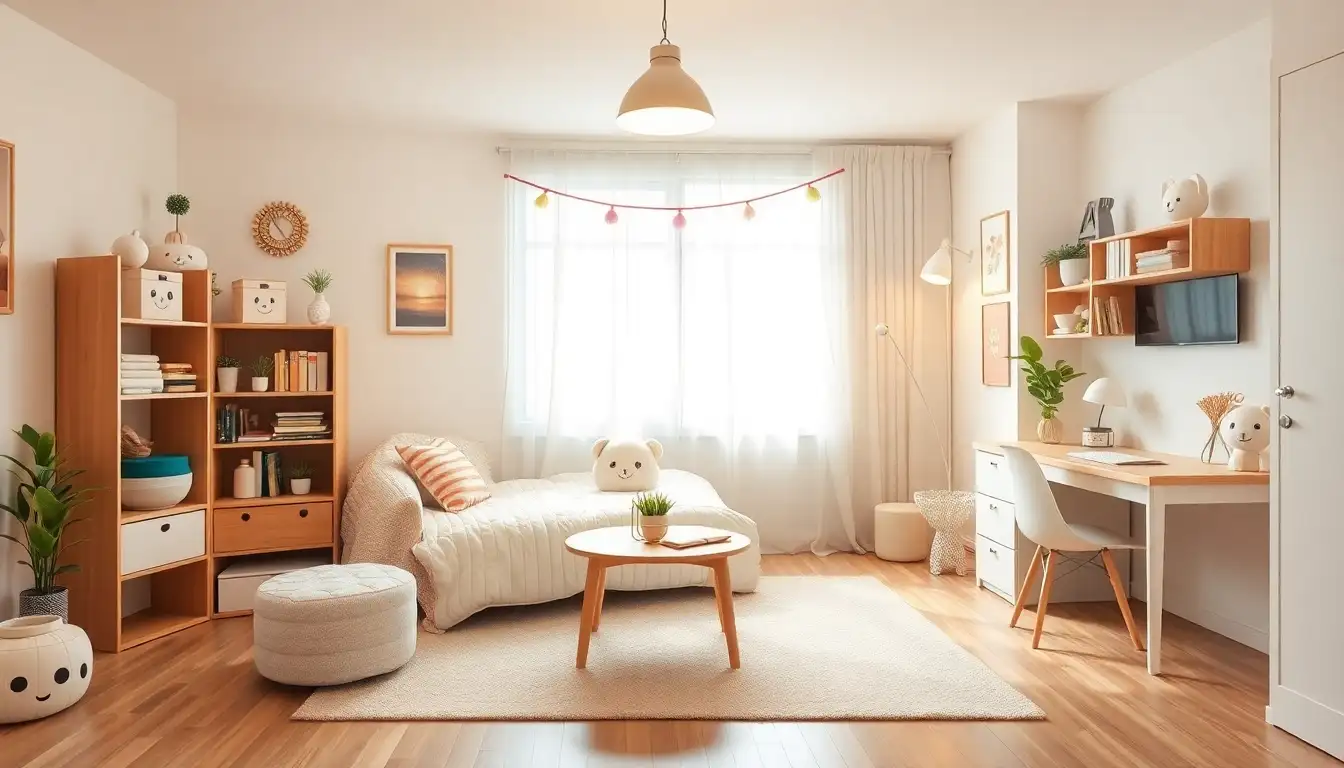
Kawaii decor elements are characteristically whimsical yet harmonious. They beckon the minimalist to express themselves through purposefully chosen pieces rather than clutter. The importance of personal curation signifies a conscious choice of one’s identity in physical form.
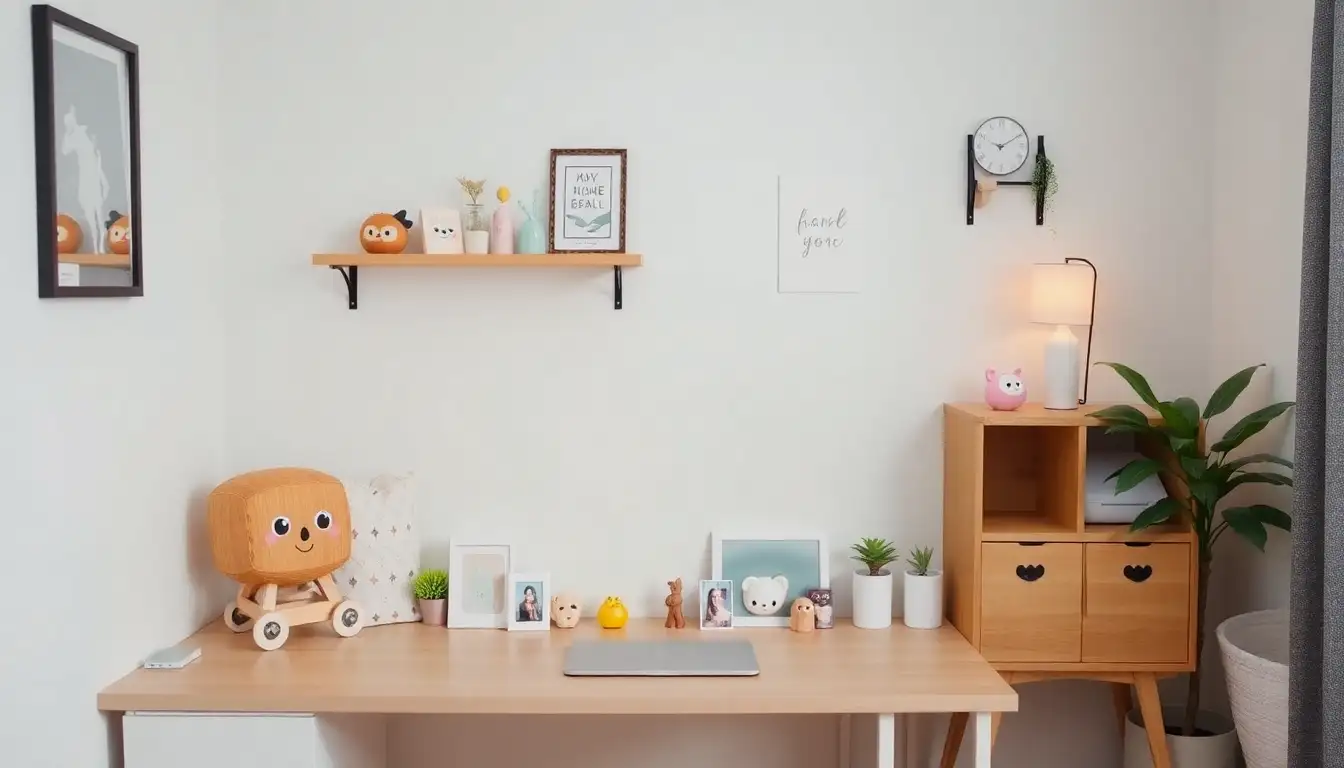
Begin with plush toys of a beloved character or charming figurines that can add personality to shelves without disorder[5]. The subtle presence of these pieces fosters both connection and comfort, making any space inherently welcoming.
Pattern Meets Personality
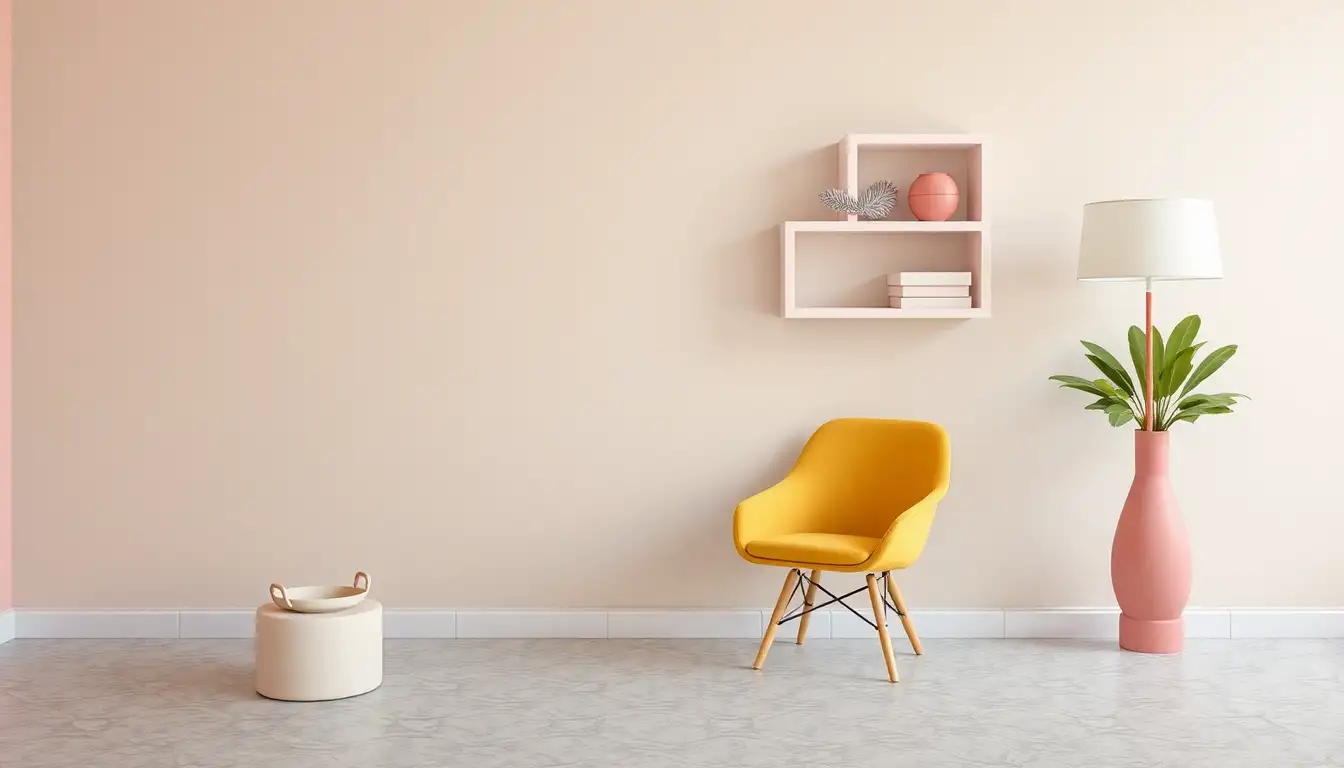
Incorporate playful patterns that speak to your individuality without overpowering. Polka dots, stripes, or simple geometric forms in soothing palettes can animate the room. The designs echo the essence of kawaii, an embodiment of embracing individuality with a soft restraint.
Consider wall decals as they lend an easy transformation ability, shifting from one motif to another while keeping your space minimalist.
Furniture that Speaks Kawaii
Fluidity and Form
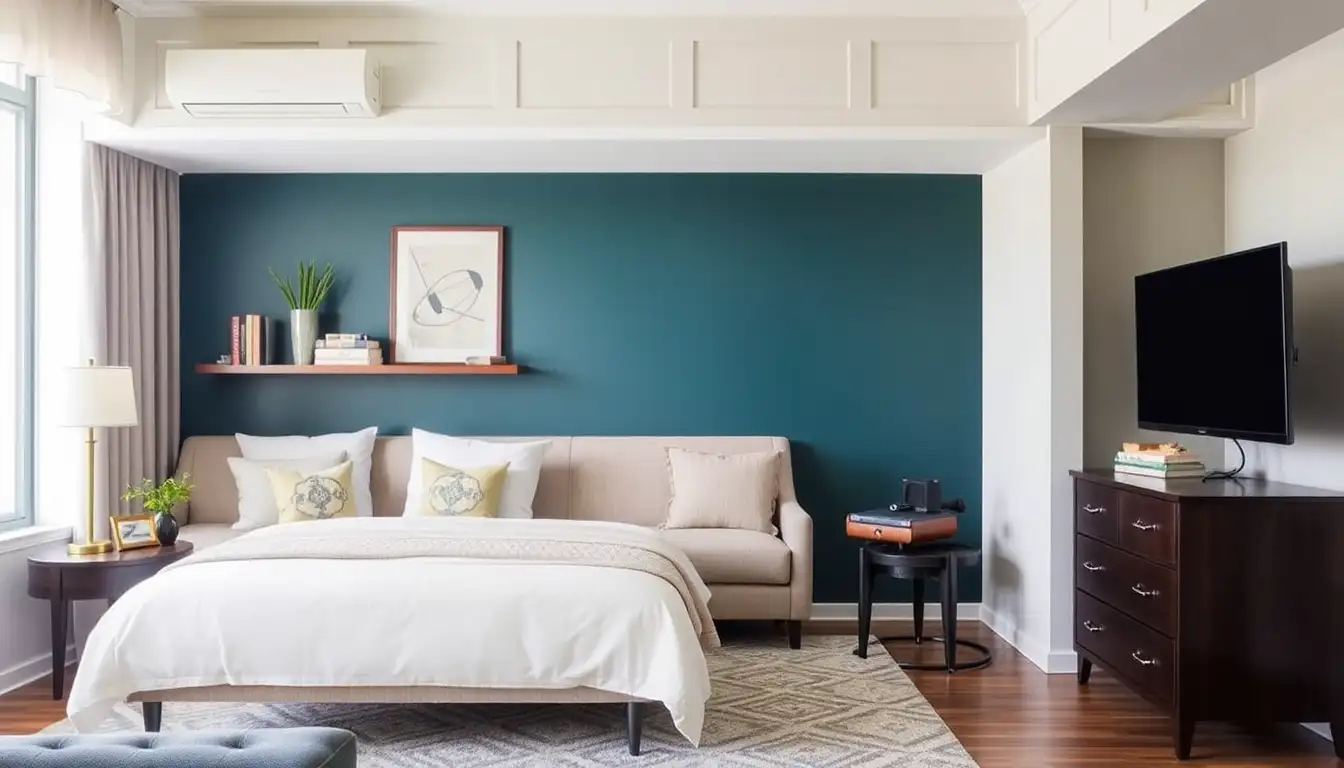
Furniture plays an instrumental role in pronouncing kawaii aesthetics. Opt for curvy silhouettes and soft outlines that evoke tenderness and warmth – think crescent-shaped chairs or oval tables with subdued colors. Each piece should not only fulfill a functional purpose but serve as an artistic extension of the room’s personality[6].
Beyond Functionality
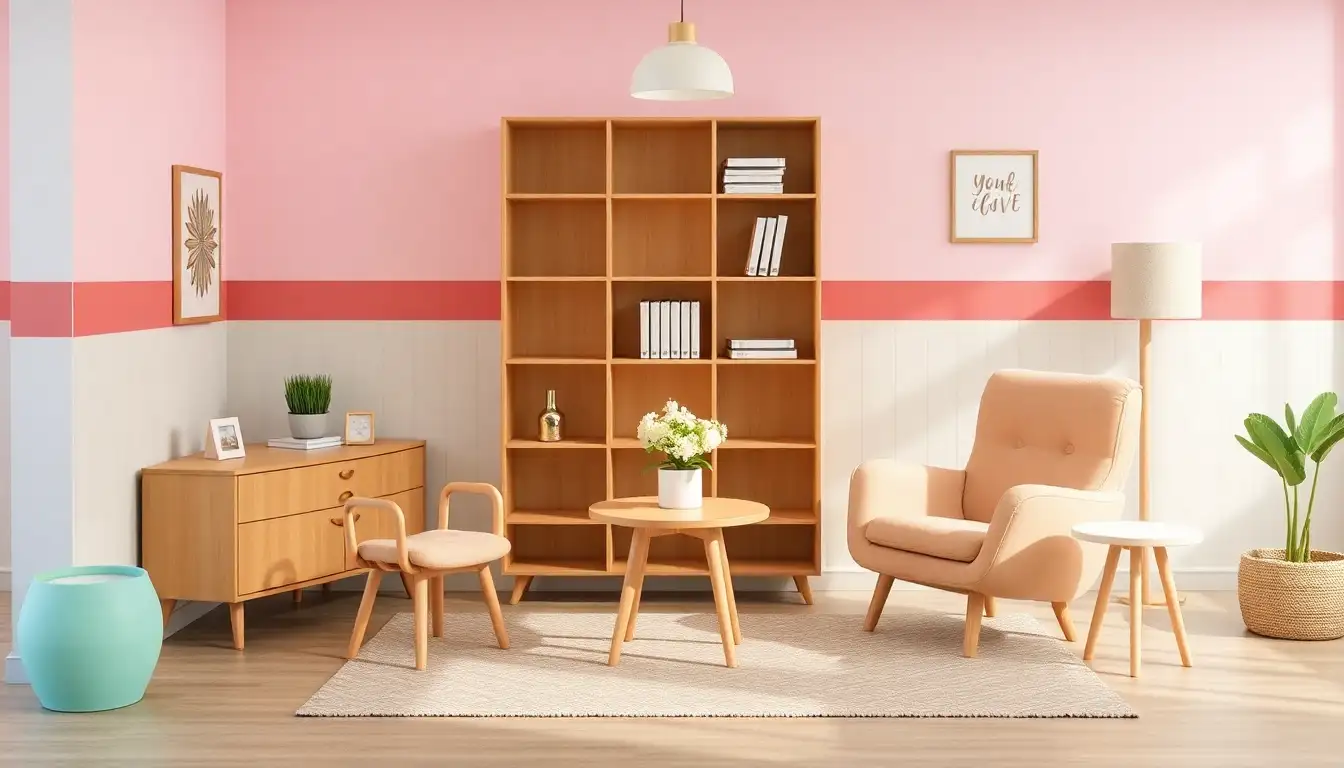
While aesthetics lead the narrative, functionality should not be an afterthought. Look for pieces that offer storage solutions without compromising on the silhouette. Upholstered benches with storage compartments or multi-level pastel bookshelves add layers of utility and design harmony. It invites a serenity of uncluttered living that remains visually dynamic.
Adding Personal Touches: The Final Touch
Displaying Sentimental Treasures
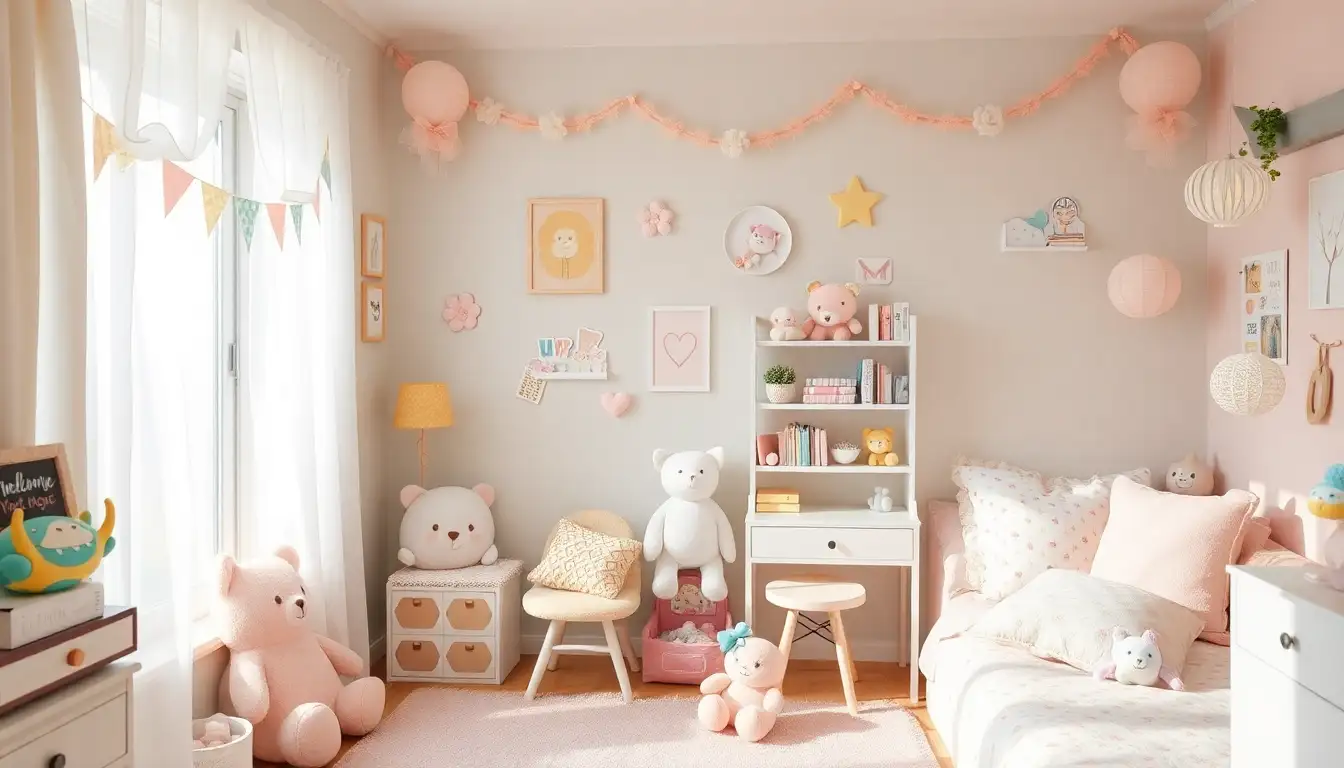
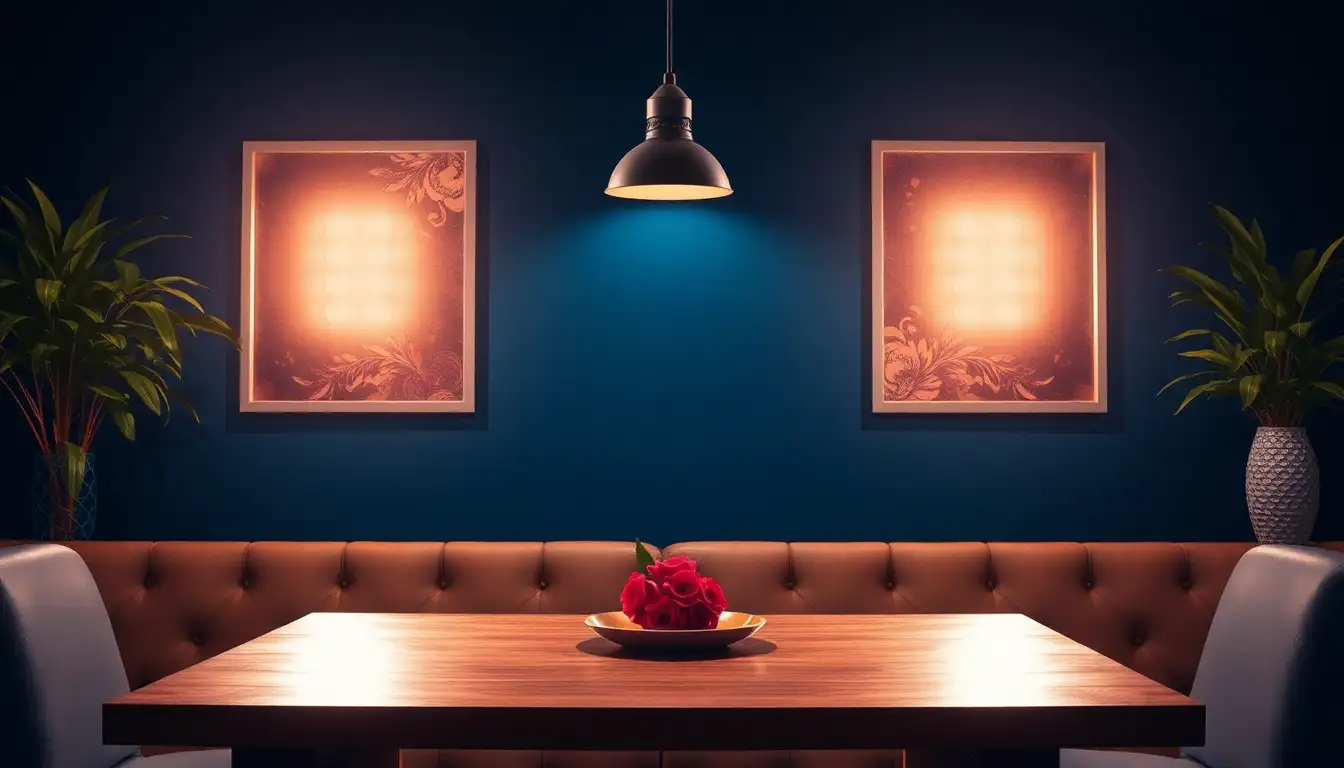
In the realm of kawaii, personal expressions solidify the transformation. Showcase photos in whimsical frames or craft personal collages that uniquely spell ‘you’. These treasures, while telling your story, align with the envisioned soft, comforting ambiance.
Quotable prints leaning against your wall or placed atop dressers provide personal mantras that reinforce positive mindsets, encouraging daily doses of inspiration[7].
Crafting with Intention
Bring out the artisan in you by introducing handmade crafts. These can be upcycled jars or self-painted planters, adding character while aligning with eco-consciousness. The final touches often hold stories within their textures or brush strokes, forming an intimate bridge between your walls and your world.
Lighting Up: Creating the Perfect Ambiance
The Glow of Softness
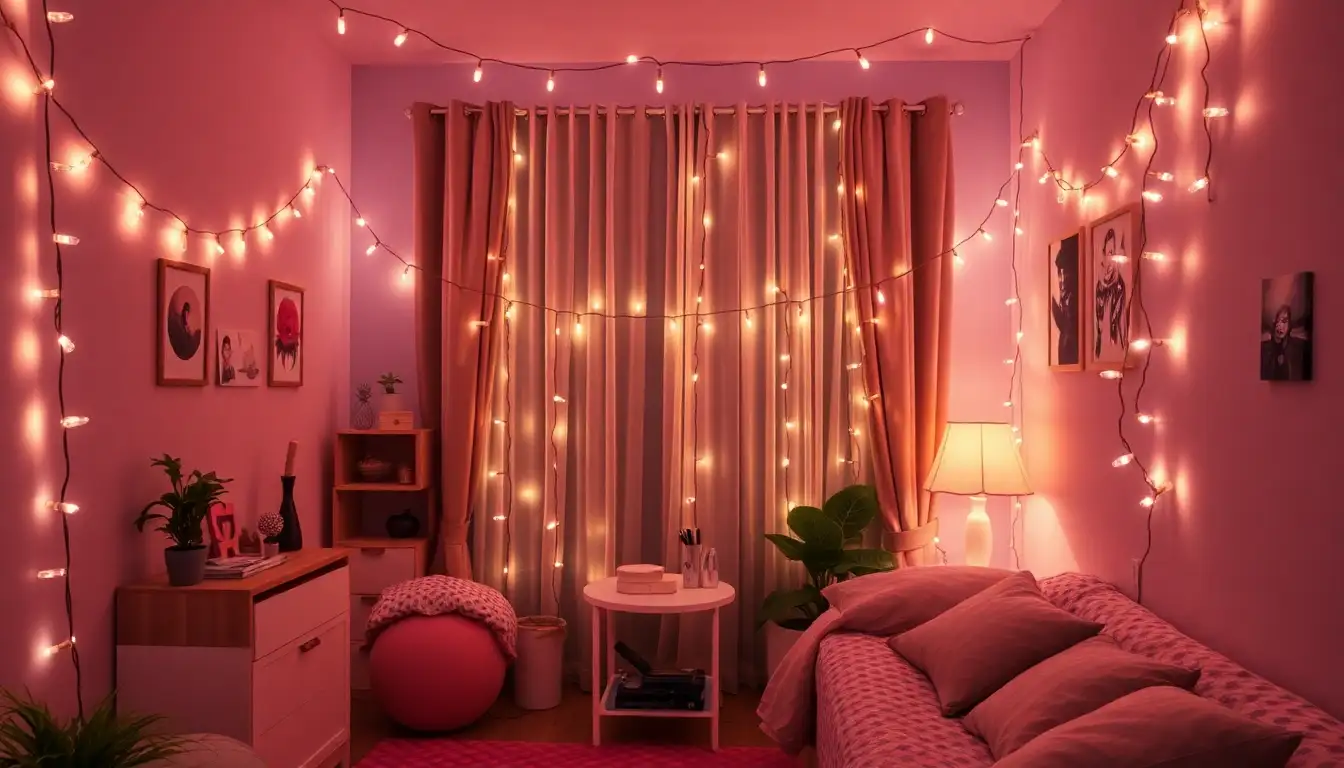
Lighting, subtle yet crucial, is the unsung hero in coloring the mood of a kawaii space. Soft, diffused lighting creates an ethereal glow that warmly embraces every corner[8]. Consider investing in dimmable LED string lights or table lamps that offer multiple shades – each capable of casting a comforting hue as the day draws to a close.

Highlighting Features with Creativity
Fairy lights are more than twinkling sources; they can wrap around bed frames or encircle windows, elevating ordinary spaces. Additionally, light fixtures in fun shapes such as clouds or stars provide unexpected joys, evoking childlike wonders while staying true to kawaii’s playful character.
Budget-Friendly Alternatives
Affordable Luxuries
Kawaii life on a budget doesn’t mean compromising on vision. Thrift stores and online marketplaces are treasure troves waiting to curate your whimsical realm affordably. Simple DIYs – painting furniture in pastel tones or crafting personalized garlands – can transform an ordinary item into a captivating decor element.
Visit flea markets where charm and uniqueness might make unexpected appearances, offering personality that mass-produced items can’t[9].
Repurposing and Upcycling
Find sustainability’s beauty within human creativity. Repurpose fabrics for throw pillows or collect quirky buttons for handmade coasters. Old vinyl records or magazines can be refurbished into art pieces, both trendy and eco-friendly. Embrace small-scale projects that resonate with value and innovation, advocating an inspiring and cost-effective living.
FAQ: Aesthetic Kawaii Room
What Are Fundamental Characteristics of Kawaii Aesthetic Rooms?
Aesthetic kawaii rooms are defined by their fusion of pastel colors and bold accents, harmonious decor that highlights personality, and an embrace of playfulness through whimsical elements. They often feature soft textures, plush toys, and a minimalist approach that judiciously curates personal items, establishing a welcoming and calming atmosphere.
How Can I Integrate Kawaii Aesthetics in a Small Space?
Even small spaces can embrace kawaii aesthetics by opting for multifunctional furniture and utilizing vertical storage. Stick to lighter color schemes to make the space feel larger, and include small accessories like plush toys or pastel-colored throws that introduce kawaii charm without overwhelming the room.
Where Can I Find Affordable Kawaii Decor?
Affordable kawaii decor can often be found in thrift stores, vintage shops, and online marketplaces such as Etsy. These avenues provide unique pieces with personality and charm. DIY projects can also offer a cost-effective way to customize ordinary objects into kawaii treasures.
What Lighting Works Best in a Kawaii Room?
Soft, ambient lighting is ideal for a kawaii room. Opt for dimmable lamps, LED string lights, and playful fixtures that offer a variety of hues. Such lighting provides a comforting glow that elevates the room’s coziness and emphasizes the whimsical elements of kawaii design.
Are There Eco-friendly Options for Kawaii Room Decor?
Eco-friendly options abound within kawaii room decor. Upcycle items you already own, repurpose materials from second-hand finds, and support artisans creating sustainable products. Choosing furnishings and decor handmade from renewable resources or reclaimed materials also aids in environmental consciousness.